Thunes and Coinbase announced on October 19, 2026, at Money20/20 USA, a two-way deal on stablecoin payouts. Coinbase will integrate Thunes’ Direct Global Network to pay out to local clearing systems, bank accounts and mobile wallets, while Coinbase will power the stablecoin infrastructure inside Thunes. The companies name enterprise supplier payments, gig worker payouts and international remittances as the uses.
What was announced
The agreement runs in both directions, according to the Thunes release and a Coinbase blog post published the same day.
| Direction | What each side provides |
|---|---|
| Thunes to Coinbase | Direct Global Network: payout access to local clearing systems and alternative payment methods, “last-mile” delivery to mobile wallets and bank accounts |
| Coinbase to Thunes | Coinbase’s suite of stablecoin solutions, to integrate stablecoins more deeply across Thunes’ network |
| Uses named | Enterprise supplier payments, gig worker payouts, international remittances |
| Announced | October 19, 2026, Money20/20 USA, Las Vegas |
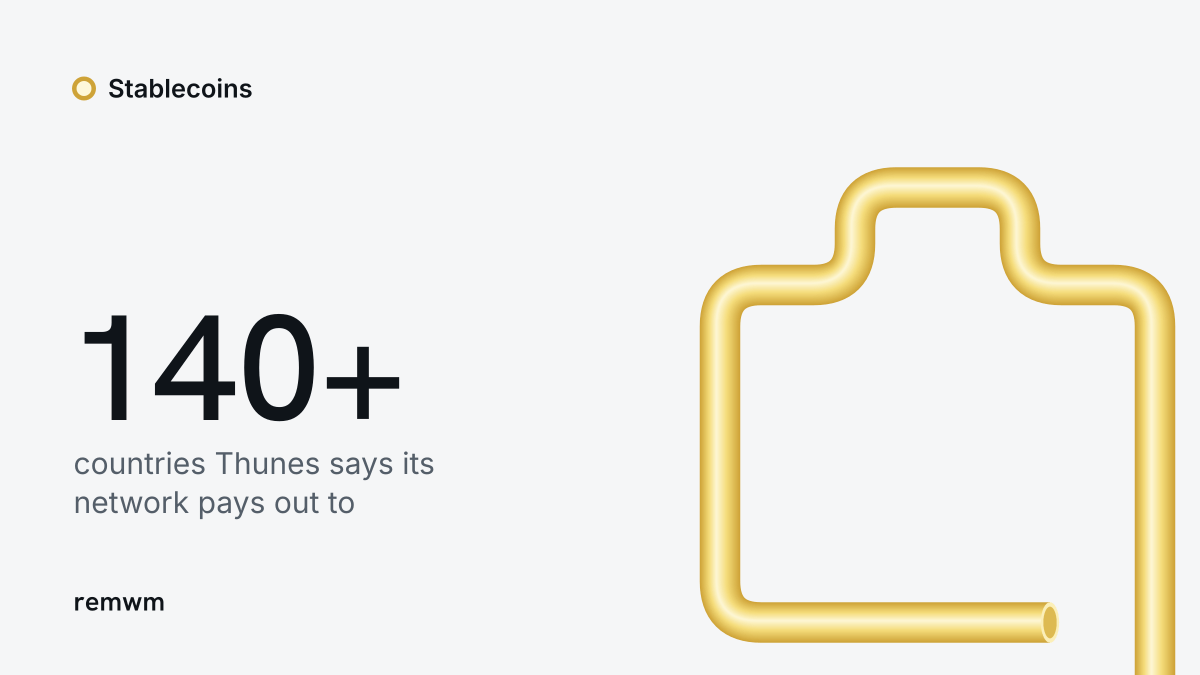
Thunes says its network makes real-time payments in over 140 countries and more than 90 currencies, connects to over 12 billion mobile wallets, stablecoin wallets and bank accounts, and reaches 15 billion cards through more than 220 payment methods. Coinbase adds that Thunes holds more than 50 global payment licenses.
“Last-mile connectivity is a key part of this, and working alongside Thunes allows us to deliver an end-to-end payment experience that offers faster, friction-free payouts across more countries and currencies than ever before,” said Alec Lovett, Head of Infrastructure Products at Coinbase.
“As Coinbase integrates our global network to power payouts for its users, we’re demonstrating how seamless cross-border rails can connect digital assets to traditional finance,” said Kyle Rosen, Head of North America at Thunes.
How the flow works
A stablecoin moves value between wallets in minutes, but most suppliers, workers and families still need local currency in a bank account or mobile wallet. That last step is where cross-border stablecoin payouts usually depend on a fiat partner.
In this deal, Coinbase customers keep their funds on the stablecoin side, and Thunes delivers the local-currency leg through its own connections to domestic rails and wallets. In the other direction, Thunes gets stablecoin rails from Coinbase rather than building its own, so its members can use stablecoin wallets as another destination on the same network. In practice, each company is the other’s stablecoin on off ramp api for the leg it does not run itself.
Why it matters
For businesses paying abroad, the deal joins two pieces of stablecoin infrastructure that are often bought separately: the stablecoin side (issuance access, wallets, conversion) and the fiat payout side (licenses, local bank and wallet connections, compliance in each corridor). A platform working with either company may now reach the other’s coverage through one relationship.
Neither release gives pricing, a launch date by country or the specific stablecoins involved. Those details will decide how far the deal changes costs for supplier and payroll flows.
What to watch
- Which countries and currencies Coinbase customers can pay out to first through Thunes.
- Which stablecoins Thunes members can send or receive through Coinbase’s infrastructure.
- Whether the payouts appear in Coinbase Developer Platform products for business customers.