A white label stablecoin carries a company’s brand while a licensed issuer mints it, holds the reserves and redeems it. Fintechs, platforms and banks use the model to launch their own dollar token without becoming an issuer themselves. In the United States the GENIUS Act decides who that issuer may be, and providers such as Paxos, Bridge, Anchorage Digital and Brale now sell the role as a service.
How a white label stablecoin works
Three parties sit behind a branded token:
- The brand. The company whose name and ticker the users see. It runs distribution: the app, the wallet, the rewards, the customer relationship.
- The issuer. The regulated entity that mints and burns the token, owes redemption to holders and holds the reserves. Paxos puts it as “your brand on the token, our name on the obligations.”
- The infrastructure. Smart contracts on one or more blockchains, custody of the reserves, attestations and the on- and off-ramps that turn dollars into tokens and back.
PayPal USD is the best-known example: Paxos says PYUSD runs on its white label model today, alongside its own Global Dollar (USDG).
What the GENIUS Act changes
The Guiding and Establishing National Innovation for U.S. Stablecoins Act (Public Law 119-27, signed July 18, 2025) makes it unlawful for anyone other than a permitted payment stablecoin issuer to issue a payment stablecoin in the United States. The law names three kinds of permitted issuer:
| Permitted issuer | Approved by |
|---|---|
| Subsidiary of an insured depository institution | The bank’s primary federal regulator, under section 5 |
| Federal qualified payment stablecoin issuer, such as a nonbank or an uninsured national bank | The Office of the Comptroller of the Currency (OCC) |
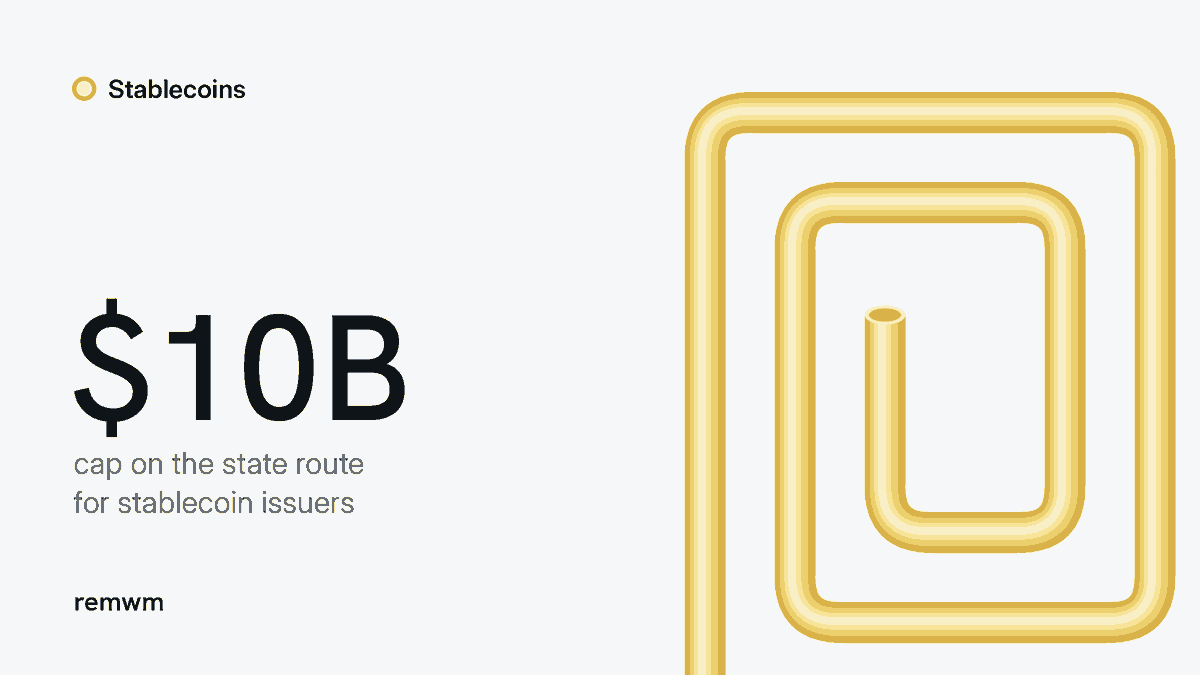
| State qualified payment stablecoin issuer | A state payment stablecoin regulator; the state route is open up to $10 billion in outstanding issuance |
For a brand, this is the reason for white label: unless it is willing to become one of these issuers, a licensed partner has to issue the token. The law also gives federal regulators 120 days to decide on a substantially complete application, and three years after enactment it bars digital asset service providers from offering or selling a payment stablecoin to people in the United States unless a permitted issuer issued it. The agencies’ implementing rules are followed in stablecoin infrastructure news, including the treasury stablecoin issuance rule and the federal reserve genius act stablecoin rules.
Three ways providers sell it
The offers fall into three models. They differ in who is the issuer and what backs the token.
| Model | Who runs issuance | What backs it | Examples |
|---|---|---|---|
| Issuer as a service | The provider, as a regulated entity | Reserves the provider manages | Paxos, Bridge, Anchorage Digital, Brale, MoonPay Issuance |
| Issuance software for licensed issuers | A bank or licensed firm that runs the provider’s stack | That issuer’s own reserves or pledged collateral | M0, Fiserv’s digital asset platform |
| Branded token over an existing stablecoin | The brand, through the provider’s minting and redemption APIs | Reserve assets such as USDG, USDC, PYUSD or USDT | Paxos Labs Mint |
What providers publish
The table records what each provider says on its own pages as of October 3, 2026.
| Provider | Regulated entity it names | Reserves and reporting | Chains and distribution |
|---|---|---|---|
| Paxos | An OCC-regulated national trust bank | Reserves segregated and held bankruptcy-remote, attested monthly by an independent auditor | Issues and manages white label and partner assets; says it never competes with its clients for customers |
| Bridge (Stripe), Open Issuance | Bridge issues and manages custom stablecoins | Reserve management through BlackRock, Fidelity Investments and Superstate; public supply and reserve data | Interoperable with Open USD (OUSD); ramps, wallets and cards from Bridge, Privy and Stripe |
| Anchorage Digital | Anchorage Digital Bank, N.A., which it calls the first federally chartered bank approved to issue stablecoins | Attested reserves; 1:1 mint and redemption | Contracts on EVM chains, Solana, Cosmos and others |
| Brale | Brale issues fiat-backed stablecoins for businesses | 1:1 reserves with reserve visibility in its dashboard | Multi-chain custody; minting funded by ACH, wire or RTP; examples SBC and USDGLO |
| MoonPay Issuance | MoonPay acts as the issuer, citing U.S. money transmitter licensing | Institutionally managed reserves | Built on M0; purchase through MoonPay’s payment methods |
| M0, Stablecoin Core | The financial institution using the stack | The issuer pledges eligible collateral and manages reserves | Software for issuance and distribution; aimed at issuance-as-a-service providers, licensed crypto firms and banks |
The Fiserv platform shows the second model in use: Bank of North Dakota’s fiserv roughrider coin is issued by VersaBank on Fiserv’s issuance, reserve, custody and settlement infrastructure.
How to compare providers
- Who is the issuer in law. Check which entity owes redemption, which regulator approved it under the GENIUS Act, and when.
- Reserves. Ask where the reserves are held, in which assets, who attests them and how often.
- Economics. The reserves earn income. Bridge says brands decide how to use the rewards their stablecoin generates, and Paxos lists rewards among its platform features. Find out who keeps what share.
- Redemption. Ask who can redeem directly, in what minimum size, and how fast dollars arrive.
- Interoperability. A new token has no liquidity of its own. Bridge links Open Issuance tokens to Open USD; ask any provider how holders convert to USDC or dollars.
- Chains. Ask which blockchains the contract can run on and who controls upgrades and freezes.
- Exit. Ask whether the token, its contract and its holders can move to another issuer.
A white label stablecoin is one layer of the stack mapped in stablecoin infrastructure. A bank weighing its own token should also read tokenized deposits, since a deposit token is not a payment stablecoin under the GENIUS Act.