A loan servicing platform is the system of record for a loan after it is funded. It keeps the ledger, accrues interest, takes ACH and card payments, sends statements, runs delinquency and collections work, reports to credit bureaus in Metro 2 format and to investors, and applies servicing rules. Federal servicing duties are far heavier for mortgages than for consumer installment loans.
What a loan servicing platform does after origination
An origination system stops working at funding. The servicing platform carries the loan for the rest of its term. The two choices are related, and some vendors sell both, which is why it helps to read this next to how to choose a loan origination system and the loan origination software comparison.
The functions the vendors document:
- Loan ledger and accounting. Mambu supports five loan product types, fixed term, dynamic term, interest-free, tranched and revolving credit, and each product links to accounting rules on a cash or accrual basis.
- Interest accrual. In Peach’s API, activation “disburses principal and begins interest accrual”, so a loan accrues nothing before it is activated.
- Payment processing. Repayment by ACH or card, and disbursement out. LoanPro says its customer base moves “about $4 billion a month in loan repayments and disbursements” (LoanPro release via Business Wire, September 24, 2026).
- Statements and payoff quotes. For closed-end consumer credit secured by a dwelling, Regulation Z requires a periodic statement each billing cycle showing the amount due, a breakdown of past payments and transaction activity (12 CFR 1026.41), and a payoff statement within seven business days of a written request (12 CFR 1026.36).
- Delinquency and collections workflows. Mortgage servicers work to fixed deadlines, set out below. Peach sells a Compliance Guard that it says tracks FDCPA, SCRA, TCPA, UDAP and Reg F rules.
- Credit bureau reporting. File generation in Metro 2 format, or a feed to a reporting intermediary.
- Investor reporting. Fiserv’s brochure describes a “rules-based approach to investor reporting for MBS and ABS” (LoanServ brochure). ICE lists investor reporting among MSP’s servicing processes in its 2025 Form 10-K, and Nortridge’s commercial product supports participations and syndications.
Mortgage loans and consumer installment loans: which rules apply
Regulation X’s mortgage servicing subpart applies to “any mortgage loan”, meaning a federally related mortgage loan, and excludes open-end home equity plans (12 CFR 1024 Subpart C). Personal and auto installment loans sit outside it. For a mortgage servicer, the calendar is written into the rule:
- Live contact with a delinquent borrower “no later than the 36th day of a borrower’s delinquency”, and a written notice by day 45 (1024.39).
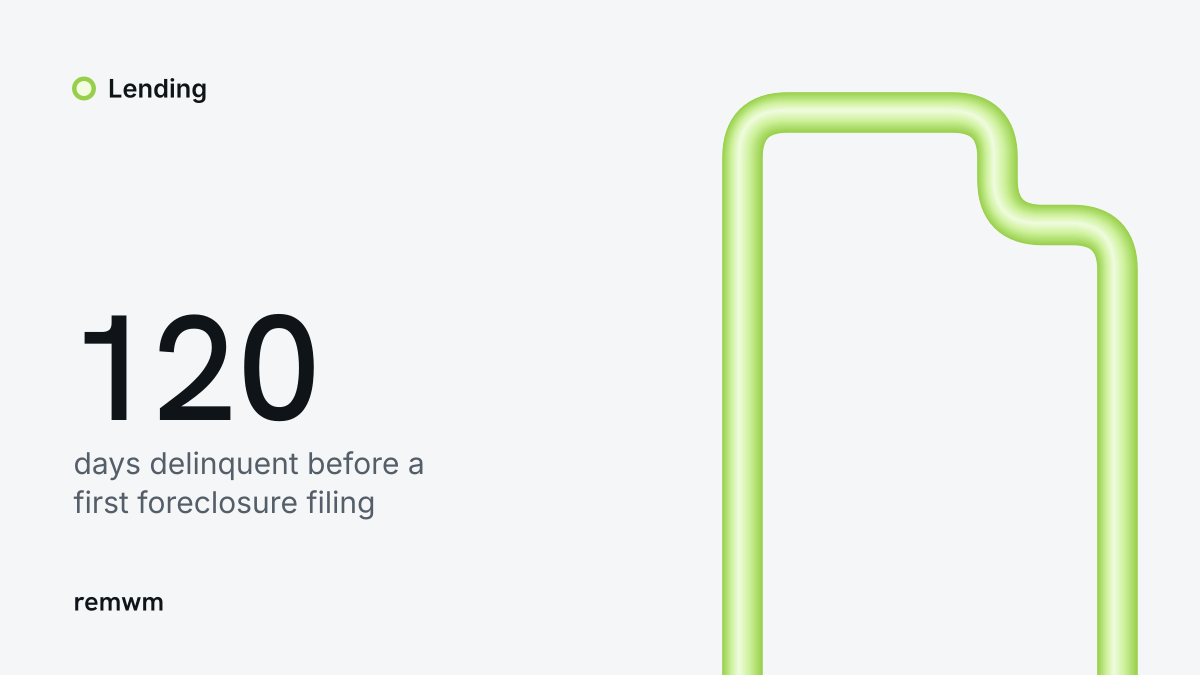
- No first foreclosure notice or filing until the loan is “more than 120 days delinquent”, with narrow exceptions for a due-on-sale violation and for joining another lienholder’s action (1024.41).
- A complete loss mitigation application received more than 37 days before a foreclosure sale must be evaluated for all available options within 30 days (1024.41).
- A notice of error must be acknowledged within five business days and answered within 30 business days for most errors, extendable by 15, or within seven business days for a payoff balance error (1024.35).
| Duty | Mortgage (closed-end, dwelling) | Consumer installment loan |
|---|---|---|
| Periodic statement each billing cycle | Yes, Reg Z 1026.41 (small servicers exempt) | Not required by 1026.41; its scope is dwelling-secured |
| Credit a payment as of the day received | Yes, 1026.36©(1) | Not covered by 1026.36© |
| Live contact by day 36, notice by day 45 | Yes, Reg X 1024.39 | No |
| No foreclosure filing before 120 days | Yes, 1024.41(f) | Not applicable |
| Autopay cannot be required as a condition of credit | Yes, Reg E 1005.10(e) | Yes, Reg E 1005.10(e) |
| Written accuracy policies when reporting to bureaus | Yes, 1022.42 | Yes, 1022.42 |
| Reg F call limits | Only where the collector is a “debt collector” | Same |
Two of those rows reach every consumer lender. Regulation E bars conditioning an extension of credit on repayment by preauthorized electronic transfers, with an exception for overdraft lines, so a platform must be able to take a payment some other way. 12 CFR 1022.42 requires every furnisher to have written policies and procedures on the accuracy and integrity of what it reports.
Regulation F is narrower than it looks. Its definition of debt collector excludes an employee of a creditor collecting in the creditor’s own name, so a lender servicing its own loans is generally outside it unless it collects under another name. Where it applies, a collector is presumed compliant if it places no more than seven calls about a debt in seven consecutive days and none within seven days of a phone conversation (1006.14). Being outside these federal servicing rules is not the same as being unregulated: state servicing and collection law and UDAAP standards still apply and are not covered here.
Size matters for mortgages. A servicer that, with its affiliates, services 5,000 or fewer mortgage loans, all of which it or an affiliate owns or originated, is exempt from the periodic statement rule and from Reg X sections 1024.38 through 1024.41 (1026.41).
Credit bureau reporting and Metro 2
Metro 2 is the credit reporting industry’s standard electronic format for furnishing consumer account data. A task force of Equifax, Experian, Innovis and TransUnion maintains it and CDIA publishes it (CDIA).
Platforms handle it differently. LoanPro offers three routes: an enhanced CSV, a Metro 2 text file, or a Bloom Credit integration (LoanPro help). Its Metro 2 output covers Base, J1, J2, header and trailer segments and does not support K1 through K4, L1 or N1; LoanPro states it is the client’s responsibility to obtain bureau credentials and to validate each file before submission (LoanPro help). Canopy carries Metro 2 configuration in its product object and passes it to Bloom (Canopy API reference).
Loan servicing platforms compared
The order carries no meaning. “n.p.” means not published on the pages read.
| Platform | Loan types, from its own docs | Deployment | Public API docs | Published pricing |
|---|---|---|---|---|
| LoanPro | Installment, lines of credit, credit cards, leases, BNPL, merchant cash advances, equipment, auto, commercial | SaaS, API-first | developers.loanpro.io | n.p. (demo request page) |
| Canopy | Revolving including cards and charge cards, multi-loan and MCA, installment, term loans, working capital lines | SaaS API, single-tenant sandbox | docs.canopyservicing.com | n.p. |
| Peach (SoFi) | Installment, revolving lines, BNPL | SaaS API | docs.peachfinance.com | n.p. |
| Nortridge NLS | Consumer, auto, commercial with participations and syndications, agriculture, CDFI, real estate, education, micro-finance | SaaS, enterprise license, private cloud or on-premise | developer.nortridge.com | Yes |
| Mambu | Fixed term, dynamic term, interest-free, tranched, revolving; consumer, business, embedded, mortgage | Cloud-native SaaS on AWS, Google Cloud or Azure | docs.mambu.com | n.p. |
| ICE MSP | First lien mortgages, home equity loans and lines | Public cloud plus private data centers, API catalog (10-K) | n.p. | n.p. |
| Sagent (LoanServ, Dara) | All mortgage and consumer loan types; first and second liens, ARMs, chattel | Dara: cloud-native, open API | n.p. | n.p. |
| Fiserv LoanServ | Mortgages, home equity loans and lines, personal loans and lines, installment, direct and indirect auto | n.p. | n.p. | n.p. |
| FIS Commercial Loan Servicing | Commercial only: syndications, participations, bilaterals, real estate, asset-based lending, letters of credit | n.p., “open APIs” on the product page | n.p. | n.p. |
Every row comes from the vendor’s own documents, linked in the sections below and in Sources.
API-first servicing: LoanPro, Canopy and Peach
LoanPro covers commercial, auto, consumer and installment loans plus leases, lines of credit and hybrid products, and says more than 2,000 credit programs have been configured on it (servicing suite). Its home page adds solar, construction, BNPL, merchant cash advances and equipment financing, and lists native integrations with the card issuers Visa DPS, Lithic and Galileo, which is the shape most embedded lending programs need. The company states 600+ customers and 25M+ active loans on the URL where a price list would sit (loanpro.io/pricing). Its LMS API is REST with JSON payloads and separate production and sandbox environments (developer docs).
Canopy calls itself “the most flexible loan management system for commercial lenders” and covers secured, revolving, installment and hybrid products (canopyservicing.com). Its docs group products into revolving, multi-loan (a revolving line with installment draws, such as a merchant cash advance) and installment, with templates for charge cards, credit cards, working capital lines, term loans and MCAs (Canopy docs). Sandbox access is gated: “We currently do some lead qualification before granting access to our sandbox”, after which each client gets a private single-tenant sandbox. Canopy publishes no pricing and no customer or volume counts.
Peach describes itself as API-first servicing software with “$2B+ in active loans across 50+ lenders”, an undated figure on its home page, across installment, revolving and BNPL products. Its Compliance Guard covers federal law plus 50 states and DC for creditors and servicers, and the docs are explicit that “It does not cover rules required for debt collection agencies” (Peach API docs).
Established loan systems: Nortridge, Mambu, Fiserv and FIS
Nortridge sells NLS to lenders across agriculture, auto finance, commercial, consumer, CDFI and non-profit, healthcare, real estate, education and micro-finance (industries). It offers SaaS hosting or enterprise licensing with “public cloud, private cloud, or on-premise infrastructure” (consumer installment page) and a RESTful web service API.
Mambu is a core banking platform used for lending; it calls itself “the first cloud-native, true SaaS core banking platform” and deploys on AWS, Google Cloud or Azure (cloud services). Its lending page covers consumer, business, embedded and mortgage lending, with banks, fintechs, lenders, retailers and telcos as customers. Its docs recommend API v2; v1 is no longer actively developed.
Fiserv’s LoanServ supports mortgages, home equity loans and lines, personal loans and lines, and installment loans on a single platform, with direct and indirect auto in the brochure (Fiserv). The pages read do not state the deployment model, and no public API documentation or pricing was found. FIS Commercial Loan Servicing, formerly ACBS, is commercial only: syndications, participations, bilaterals, real estate, asset-based lending, letters of credit and multi-currency deals, with “open APIs” (FIS).
Mortgage servicing systems: ICE MSP and Sagent
ICE’s 10-K says its servicing solutions support first lien mortgages, home equity loans and lines of credit on a single platform, covering loan setup and maintenance, escrow administration, investor reporting and regulatory requirements. ICE claims MSP is “used to service more active loans than any other mortgage servicing system” (product page); that is the company’s statement and no public MSP API documentation was found. The scale of the business is in the filings: servicing software revenue was $871 million in 2025, up 3% from $848 million in 2024 (ICE FY2025 results), and $226 million in the second quarter of 2026, up 2% from $220 million a year earlier (2Q26 release).
Sagent’s LoanServ platform services all mortgage and consumer loan types, including first and second liens, ARMs, and secured, unsecured, mobile and chattel loans (Sagent). On February 21, 2024 Sagent launched Dara, which it describes as a “cloud-native, open-API ecosystem” for banks and lenders. Neither public API documentation nor pricing was found for either product.
What changed in 2026
On September 24, 2026 LoanPro launched DirectPay, payment processing it built itself, and named Moov as the first payment processor customers can buy directly through LoanPro. The same release introduced Beyond Credit, a non-revolving virtual Mastercard that disburses installment loan funds to a borrower’s Apple Pay or Google Pay wallet in real time, including weekends and holidays “when ACH doesn’t run”, with LoanPro as program manager. LoanPro also added scheduled SCRA, MLA, Death Master File, consumer bankruptcy and OFAC checks, plus an MCP interface for agents that it says runs under the lender’s existing role-based access controls; those capability statements are the company’s own. Chief executive and co-founder Rhett Roberts said payment processing, card disbursement and its guardrails are “built into LoanPro’s core” and “live today”.
Peach changed owner. SoFi announced the acquisition in May 2026, and Peach says it keeps its name inside SoFi Technology Solutions alongside Galileo and Technisys (Peach, July 3, 2026). SoFi’s second-quarter 2026 earnings release says the acquisition “further strengthened SoFi Tech Solutions’ lending capabilities”. No primary source found discloses the price.
Mortgage servicing rules are still in flux on paper only. On July 10, 2024 the CFPB proposed amendments to Regulation X’s loss mitigation procedures (Docket CFPB-2024-0024) that would remove most of the existing complete and incomplete application framework and would not apply to small servicers. The CFPB’s mortgage servicing page, updated June 1, 2026, still says the agency “issued a proposed rule that would amend the mortgage servicing rules”. As of September 24, 2026, the current rules remain in effect. Executive Order 14393, “Promoting Access to Mortgage Credit”, signed March 13, 2026, directs agencies to consider “simplifying loss mitigation requirements” and exemptions for smaller banks.
Pricing: who publishes it
Of the nine platforms here, only Nortridge publishes a price list: SaaS from $1,200 a month for up to three full users, $400 per additional user per month, a one-time $1,750 setup fee, and participations, escrow analysis and multiple-book accounting modules at $115 a month each for one to five users (Nortridge pricing). LoanPro’s /pricing URL is a demo-request page with no prices. Canopy, Peach, Mambu, ICE, Sagent, Fiserv and FIS publish none.