In a test of Project Agorá, banks and central banks paid in real money on one ledger and each took a bit over a minute.
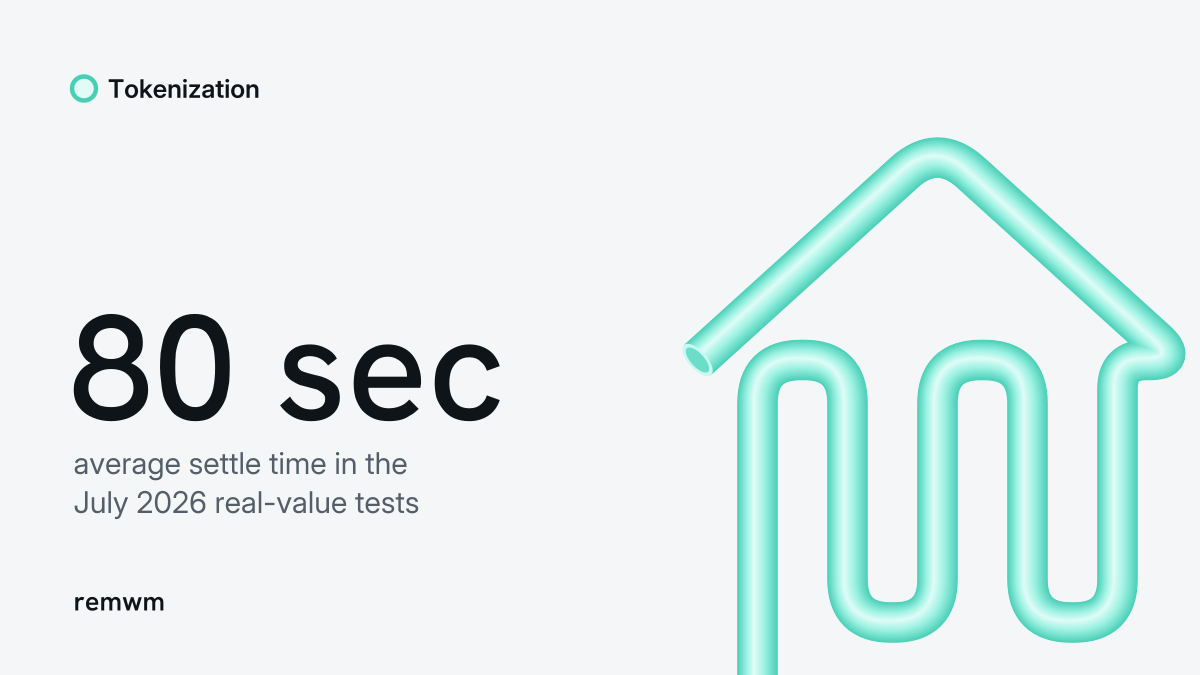
Project Agorá is a BIS Innovation Hub project that tests one shared, programmable platform for wholesale cross-border payments. Central banks record tokenized reserves on it, commercial banks record tokenized deposits, and a payment settles atomically: every leg completes, or none does. In July 2026, 28 banks and central banks moved about CHF 800,000 on the prototype, and the average payment settled in about 80 seconds.
The project is an experiment, not a product. Its value for banks and payment teams is in the details it published: how tokens were issued against reserve and deposit accounts, which controls were added before real money moved, and where the prototype touched existing systems. This guide covers those details. For the basics of bank deposit tokens, start with tokenized deposits.
Who is in Project Agorá
The Bank for International Settlements (BIS) and the Institute of International Finance (IIF) convene the project. The BIS lists seven central banks in its May 27, 2026 release: the Bank of England, the Federal Reserve Bank of New York, the Bank of France (for the Eurosystem), the Bank of Japan, the Bank of Korea, the Bank of Mexico and the Swiss National Bank. The same release said the Bank of Canada has also joined. More than 40 private financial institutions take part through the IIF.
The prototype has layers. Tokenized reserves sit on jurisdictional ledgers, and commercial banks issue tokenized deposits on a unifying ledger. The BIS says this layered design lets each central bank keep control of its currency and operations inside one interoperable platform.
What the May 2026 report found
The BIS published the project report on May 27, 2026. Its main findings, as listed in the release:
- Multi-currency settlement with tokenized central bank reserves and tokenized commercial bank deposits can address inefficiencies in wholesale cross-border payments.
- Atomic settlement of cross-border transaction chains is achievable across currencies and jurisdictions.
- Privacy can be protected at balance and transaction level while supporting regulatory compliance.
- Tokenization, as the project uses it, does not change the legal character of reserves or deposits, or the obligations attached to them.
- Settlement finality is achievable in all seven participating jurisdictions, though each still needs technical, operational and contractual requirements that fit its law.
The release also says the design could support conditional and always-on payments later, along with stronger AML, sanctions and fraud checks as data-sharing rules develop. Those are possibilities the report describes, not features in use.
The July 2026 real-value test in numbers
Real-value testing (RVT) moved money that represented actual central bank reserves and commercial bank deposits, under a contract between the testing institutions.
| Item | What the BIS reports |
|---|---|
| Participants that transacted | 28 financial institutions and central banks |
| Currencies | CHF, EUR, GBP, JPY, KRW, USD |
| Testing central banks | Bank of England, Bank of France (for the Eurosystem), Bank of Japan, Bank of Korea, Swiss National Bank |
| Scenarios | 17 scenarios, 30 transactions |
| Total value | About CHF 800,000 |
| Transaction size | CHF 9,000 to CHF 125,000, or the local-currency equivalent |
| Average time from initiation to settlement | About 80 seconds |
| Staff involved | About 250 from the public and private sector |
| Operational facilitator | SIX |
| Technology provider | Kaleido |
The use cases were dual-currency payments for corporates and banks, payment-versus-payment (PvP) between banks, and single-currency corporate, interbank and intragroup payments. Testing banks included BNY, Citi, JPMorgan Chase Bank N.A., TD Bank N.A., BNP Paribas, Deutsche Bank AG, UBS and Standard Chartered, among others.
How money got onto and off the ledger
The test shows the part that matters most to a bank’s back office: the link between a token and an account in an existing system.
Tokenized reserves. A financial institution paid into a dedicated account in its central bank’s real-time gross settlement (RTGS) system, such as an escrow or omnibus account. The central bank then issued tokenized reserves. To redeem, the institution sent a request through the test environment, and the central bank credited its reserve account in the RTGS system.
Tokenized deposits. To issue deposit tokens, a bank earmarked the funds, or booked the same amount to a designated account in its core banking system. Redemption reversed those steps. In other words, the core stayed the record of the deposit, and the token sat on top of a booked balance. Our guide to ledger balances explains how cores separate those balance types.
Messages. Payment instructions used ISO 20022 messages (pacs.008 or pacs.009). The platform produced end-of-day camt.053 statements per account for central banks and commercial banks.
The BIS notes that the prototype was not integrated with existing RTGS and core banking systems. The 80-second average was reached with test transactions that interacted with those systems through standard messages, not through a live connection.
Controls added before real money moved
For real-value payments, the prototype gained several controls, listed in the BIS’s own table:
| Control | What it did |
|---|---|
| Maker-checker | A two-step internal process for requests, payments, issuance and redemption instructions |
| Manual breakpoints | Manual bank approval of deposit-token issuance and redemption; manual central bank approval of reserve-token redemption |
| Status display | Status of issuance and redemption requests with other banks and central banks |
| Manual cross-currency amount | The cross-currency provider typed in the converted amount |
| End-of-day statements | camt.053 statements per account |
| Multi-factor authentication | For every user |
Transactions ran in set intraday windows under a written runbook, with fallback procedures if a step failed. SIX coordinated execution. A payment started once banks finished their compliance checks and, for dual-currency payments, the cross-currency provider confirmed the amount. Funds were then locked and settled atomically.
What this means for banks and fintech partners
Project Agorá is a wholesale project. It does not create a product a fintech can use, and it does not move consumer money. Still, the published setup points to work a bank would face before using any shared ledger for deposits:
- Core banking hooks. The core needs a way to earmark or move balances into a designated account when tokens are issued, and to reverse it on redemption.
- Reconciliation. Token balances on the ledger and booked balances in the core must match every day, which is why end-of-day statements were added. The same discipline is covered in account reconciliation ledger vs bank balance.
- Approvals. Maker-checker and manual breakpoints suggest banks will want human sign-off on issuance and redemption, at least at first.
- Operating hours. The tests ran in intraday windows. Around-the-clock settlement is a capability the BIS says the design could support, not something tested.
For how banks attach rules to money inside one bank, see programmable payments. For delivery-versus-payment on tokenized assets, see tokenized asset settlement. More guides sit in the tokenization section.