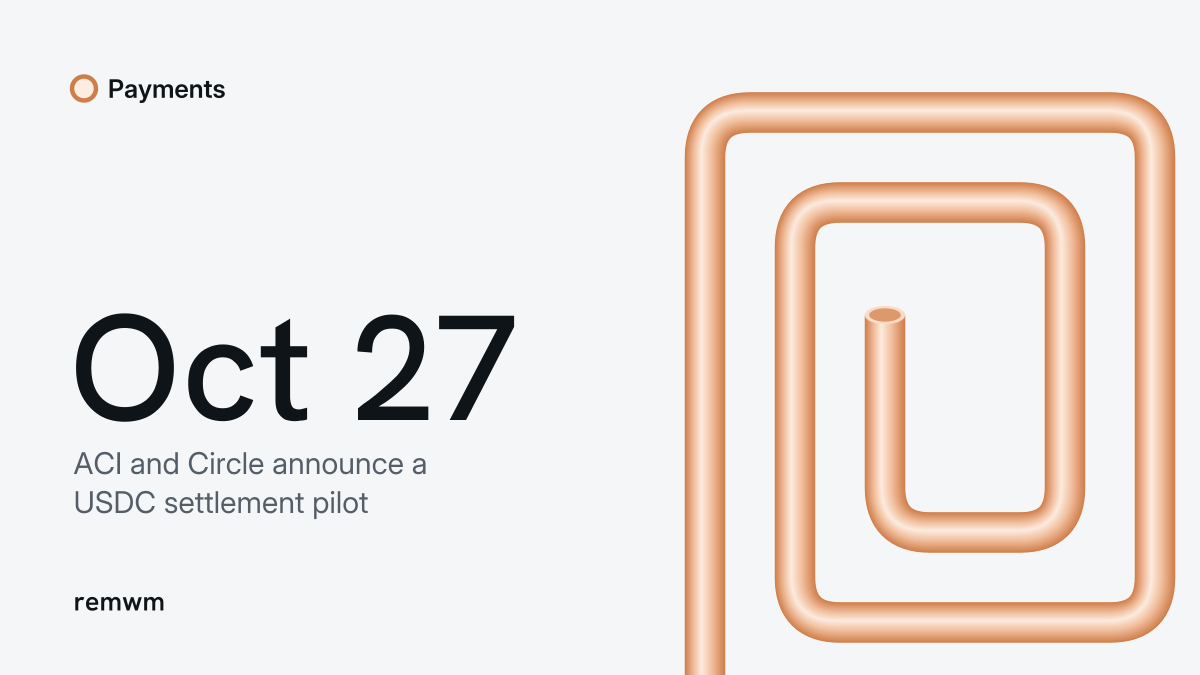
ACI and Circle plan to let banks settle in USDC from the hub they use now. The first test is set in Colombia, on Bre-B.
ACI Worldwide and Circle said on October 27, 2026 that they are working together on USDC settlement inside existing bank payment systems. The work runs through ACI Connetic, ACI’s cloud payments orchestration platform, and starts with a pilot in Colombia. ACI says it built the central infrastructure behind Bre-B, the country’s interoperable instant payments system. The aim is to let banks test stablecoin settlement next to their current rails, on one platform.
What was announced
According to the joint release, the collaboration will:
- Use ACI Connetic, which ACI describes as bringing traditional payment types, digital assets and card payments onto one cloud-native platform.
- Use Circle’s USDC infrastructure for the stablecoin leg.
- Focus first on Colombia, where Bre-B supports real-time, account-to-account payments nationwide.
- Show how stablecoin settlement can be orchestrated alongside traditional rails, so institutions can evaluate it inside the operating environment they already run.
ACI adds that Connetic is not tied to Circle: the platform supports other payment networks, digital asset providers and future settlement models through the same orchestration layer.
“The conversation around stablecoins is moving from possibility to practicality,” said Craig Ramsey, global head of account-to-account payments at ACI Worldwide. “Through ACI Connetic, we’re demonstrating a practical approach to integrating regulated stablecoins into existing payment workflows.”
Kash Razzaghi, chief commercial officer at Circle, said financial institutions in Latin America are “increasingly looking at how stablecoins can support the evolution of payments and settlement within the infrastructure they already use.”
Why it matters for banks and platforms
The pilot does not ask a bank to run a separate stablecoin stack. It puts USDC settlement inside a payments hub, the system a bank already uses to route and post payments across rails. That is the same idea behind payment orchestration on the merchant side: one layer chooses the rail, and the rest of the bank’s systems see one flow.
For banks that run ACI software, the question shifts from building stablecoin plumbing to configuring another settlement option. Treasury, governance and settlement teams would then judge USDC on cost, speed and risk next to the rails they already use. The release names those same areas, treasury operations, governance frameworks and settlement processes, as what institutions need to understand.
It follows a similar move on September 28, when Volante and Circle announced USDC workflows inside Volante’s bank payments platform, covered in volante circle usdc. The infrastructure around issuers, ramps and custody is mapped in stablecoin infrastructure.
What to watch
- Which Colombian banks take part in the pilot, and on which flows.
- Whether the pilot moves from demonstration to live settlement, and how USDC is converted to and from pesos.
- Which other networks or stablecoin issuers ACI connects to Connetic, given its multi-provider pitch.
- Whether ACI offers the same setup in other markets where it runs instant payment infrastructure.