A BIN sponsorship operating model should make the handoffs visible. The sponsor holds the regulated and network relationship, the program manager runs the proposition, the processor makes card events executable, and the card scheme sets network rules. Contracts can split work differently, but they do not erase accountability.
Short answer: build one responsibility matrix for licensing, onboarding, authorization, ledgering, settlement, fraud, disputes, reporting and incidents. Name the system of record for each decision, then test daily reconciliation and exception handling before issuing live cards.
At a glance
- The sponsor supplies the regulated issuing position and network access.
- The program manager usually owns the customer journey and daily program work.
- The issuer processor handles authorization, clearing data and card lifecycle events.
- The scheme governs network participation and operating rules.
- The sponsor remains accountable for the regulated program when work is outsourced.
This guide uses Visa’s public rules and third-party-agent descriptions plus Paynetics’ July 2026 no-IBAN partner guide. Paynetics describes its own model, so its timing and role split are examples, not universal rules.
Sponsor or licensed issuer
The sponsor controls the program’s legal and network basis. Its operating responsibilities normally include scheme membership and BIN use, product approval, customer-due-diligence oversight, settlement, regulatory reporting, third-party oversight and incident governance.
Oversight cannot be an annual file review. The sponsor needs current information about customers, transactions, reconciliation breaks, complaints and material incidents.
For background, see What is a sponsor bank? and How to choose a sponsor bank.
Program manager
The program manager designs and runs the card proposition. Depending on the contract, it may own onboarding, the customer interface, fee presentation, support and operational controls.
Paynetics’ guide puts the program manager in charge of the customer journey, internal ledger, webhook processing, transaction data, first-line support, fraud controls and reconciliation inputs. That is a specific example, but it exposes the key question: which system is the operational source of truth?
The ledger should identify available balance, holds, fees, reversals and settled entries. If a processor maintains a second ledger, every difference needs an owner and resolution path.
Issuer processor
Visa’s description of third-party servicers includes functions such as authorization, clearing and settlement support, reconciliation, reporting, risk services, disputes and card lifecycle work.
A processor may authorize transactions, maintain cards and limits, receive clearing and chargeback messages, produce settlement files and send lifecycle events. The contract must say which decisions are real time, which arrive in batches and which system wins when they disagree.
Card scheme
The card scheme moves messages between issuers and acquirers and sets participation rules. Visa’s April 2026 core rules include BIN administration and responsibilities for members and third-party agents.
The scheme record is not the cardholder’s operating ledger. The issuer and its partners must reconcile scheme clearing and settlement positions with processor, program and bank records.
Build the responsibility matrix
For each process, name the party that performs it, the party that approves the rule, the system of record, the evidence produced, and the escalation owner and deadline.
Apply that model to onboarding, authorization, clearing, settlement, fraud, sanctions, disputes, lifecycle changes, complaints, reporting and incidents.
Onboarding
Document who collects data, screens it, approves exceptions and can block issuance. Store the policy version and decision trail. A pass/fail flag without inputs and rule version is weak audit evidence.
Authorization and balance
Name the authoritative balance used at authorization. Define how holds, reversals, tips, offline transactions and partial approvals reach the ledger. Customer support must know which record to trust during an incident.
Clearing and reconciliation
Authorization is not settlement. Clearing can change the amount, currency, merchant detail or lifecycle state.
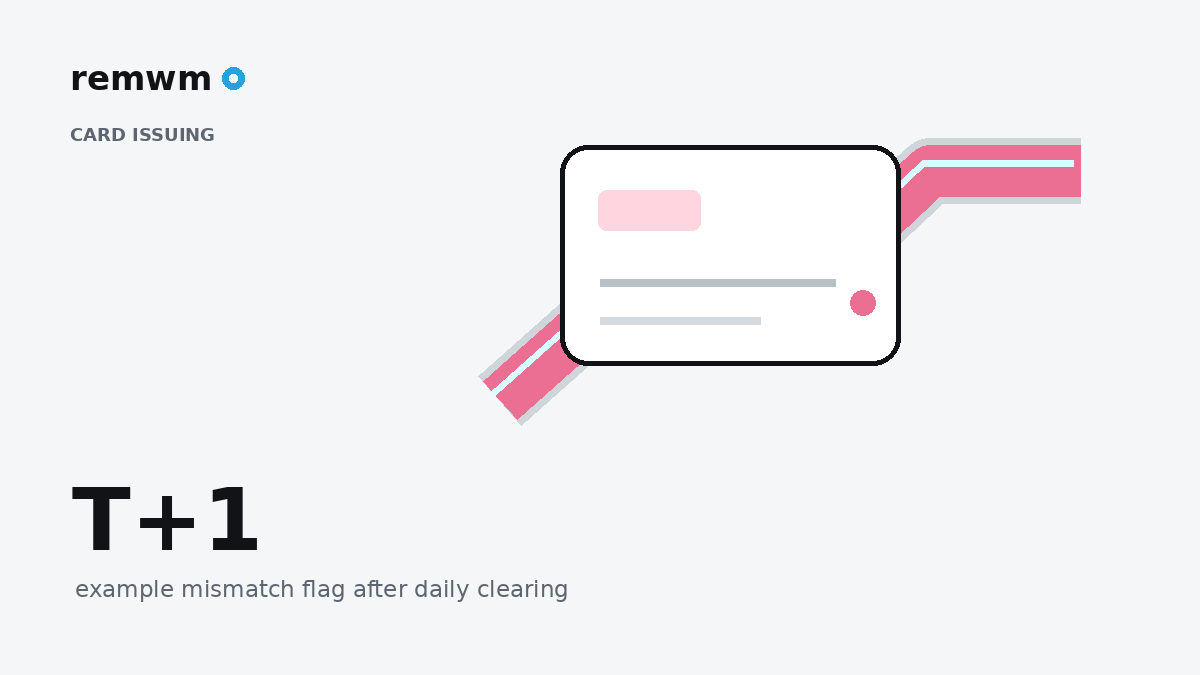
Paynetics describes daily reconciliation and settlement in its model, with the processor supplying daily data and the program manager reconciling its ledger. It gives a T+1 example for flagging mismatches. That timing is provider-specific.
Reconcile authorization to clearing, processor posting to the program ledger, program ledger to sponsor settlement, and scheme settlement to the bank’s general ledger. Include fees, FX, reversals and chargebacks.
Fraud and financial crime
Separate transaction fraud from AML and sanctions obligations, even if the same vendor supports both. The matrix should say who sets rules, receives alerts, files required reports, freezes a card or account and informs the sponsor.
Disputes
Map cardholder intake, provisional credit, evidence, scheme filing, representment, write-off and ledger posting. A dispute ticket is not finished until its money movement agrees with settlement records.
Daily controls
Useful daily controls include accepted and rejected onboarding counts, authorization and clearing totals, unmatched settlement items by age, failed lifecycle events, fraud and sanctions alert backlogs, disputes approaching deadlines, manual adjustments and material processor incidents.
Trend exceptions. A stable total with a growing aged backlog is still a failing control.