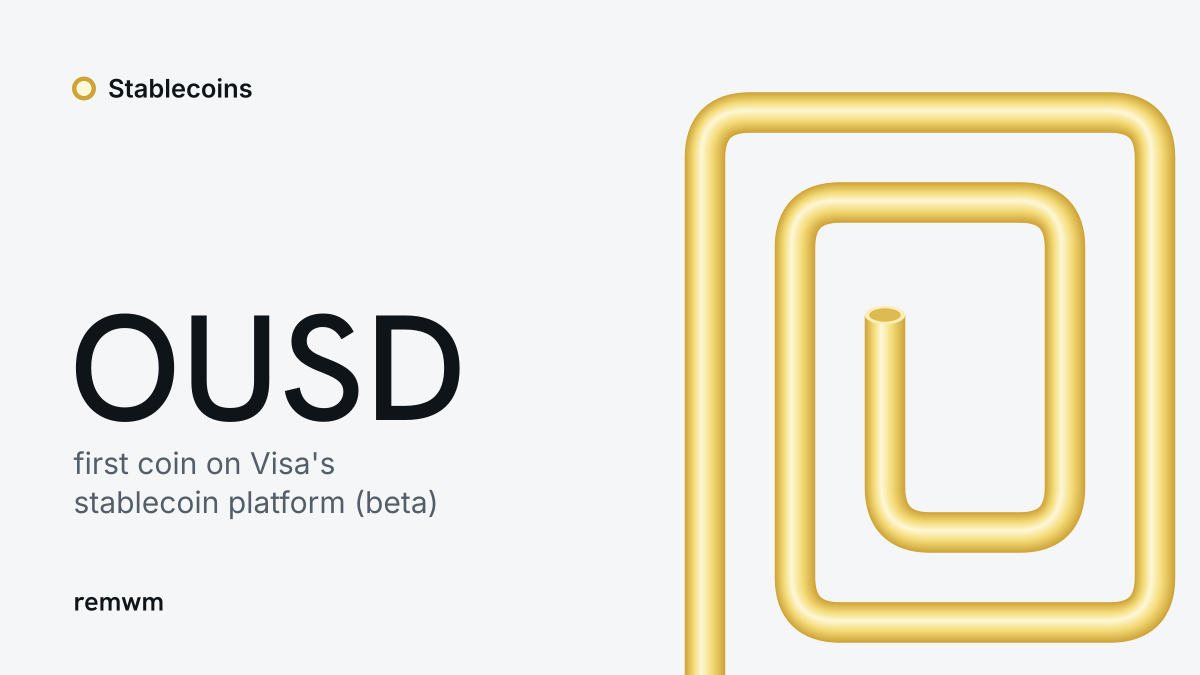
Visa announced the Visa Stablecoin Platform (VSP) on July 16, 2026, an enterprise service that gives banks, fintechs and crypto companies stablecoin minting, onchain wallets and settlement inside one Visa-managed environment. The first supported coin is Open USD (OUSD), recently introduced by Open Standard. VSP and its Wallet-as-a-Service offering are available for beta testing with select clients.
What the Visa Stablecoin Platform includes
Visa describes VSP in its press release as a platform for financial institutions, fintechs and crypto natives to reach stablecoin capabilities through “a single Visa-managed environment”. It carries onchain wallet infrastructure through the new Wallet-as-a-Service offering, together with “connectivity for minting and burning Open USD”.
The controls named in the release are the ones a treasury team would ask about. VSP applies “dual-control approval for workflows”, where one user initiates a sensitive action and another authorized user must approve it, alongside comprehensive audit logging. Jack Forestell, Visa’s chief product and strategy officer, said “for most institutions the hard part isn’t the concept, it’s the operational reality”.
On the coin itself, the release says only that Open USD is “a new stablecoin recently introduced by Open Standard”. No other supported stablecoin is named.
What it means for fintechs and banks
A card network selling minting, wallet custody and settlement as one managed service competes with the vendors that assemble those pieces today. The build decision changes with it: the dual-control approvals and audit logging a program would otherwise construct itself are part of Visa’s environment, and the mint and burn connection to Open USD comes with it. Beta access restricts that to select clients for now. Our guides to stablecoin infrastructure and the stablecoin payment gateway cover the layers VSP touches, and further launches appear in stablecoin news.
What to watch
Visa gives no general availability date. The release names beta testing with select clients as the current stage and Open USD as the starting point, which leaves two open questions: when access widens beyond the beta group, and which stablecoins follow OUSD.