The OCC on September 18, 2026 granted preliminary conditional approval to Agora National Trust Bank, a national trust bank built around dollar-backed stablecoin issuance, in Corporate Decision #1393. The decision says Agora Atlas intends to move issuance of AUSD from Agora Bermuda to the bank. Customers will be “exclusively institutional and business participants”. Issuance, reserve maintenance and digital asset custody all sit in a nonfiduciary capacity.
What the decision says
The OCC “grants preliminary conditional approval of this Application” for a bank whose activities focus “primarily on dollar-backed stablecoin issuance and reserve maintenance in a nonfiduciary capacity”, together with digital asset custody on the same nonfiduciary basis, according to the decision.
The charter is not limited to issuance. The bank also plans “payment processing and settlement services, leveraging traditional and digital rails”, covering cross-border transactions, real-time settlements and programmable payment flows. The approval is preliminary and conditional, so it clears the application at that stage rather than opening the bank.
Where it fits among OCC trust charters
Agora follows a run of stablecoin trust charters. On August 14 the OCC gave preliminary conditional approval to World Liberty Trust Company, which plans to issue USD1 and take that role “from BitGo Bank & Trust, National Association”, in Corporate Decision #1385. For comparison, that decision required at least $20 million in tier 1 capital, the greater of half of it or $10 million in eligible liquid assets, and 180 days of operating expenses in eligible liquid assets.
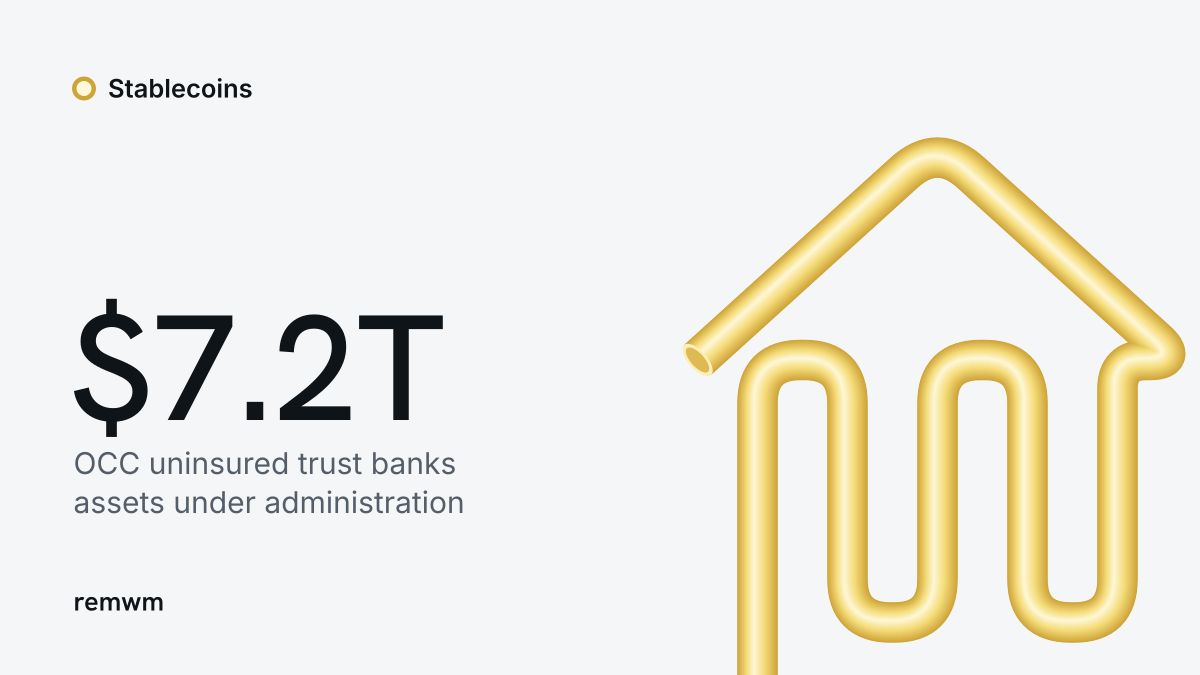
The Agora decision also lists earlier trust-bank approvals, among them Laser Digital and Connectia, the Sony Bank entity, and it puts the segment’s size on the record: OCC-supervised uninsured national trust banks reported $7.2 trillion in assets under administration.
What it means for fintechs and banks
A dollar stablecoin issued from Bermuda moves under a federal charter, and the issuer of that coin becomes an OCC-supervised counterparty for the institutions holding it. Reserves, custody and settlement sit in one supervised entity, which is a different shape from a payments company stitching those roles together across vendors. The trade-off is scope: the bank’s customers are institutional and business participants only, so consumer-facing programs still need a partner in between.
For the vendor layer around these coins, see stablecoin infrastructure and the stablecoin guides. Earlier charter steps in the same wave are in OCC conditional charters for Revolut and OpenReserve and in stablecoin news.
What to watch
- The AUSD transition. Agora Atlas’s stated plan to move issuance from Agora Bermuda to the bank.
- Conditions before opening. The approval is preliminary and conditional, not an authorization to operate.
- January 18, 2027. Treasury calls this the expected effective date of the GENIUS Act, after which a person generally may not issue a payment stablecoin in the United States without a license, per its August 17 proposal.